- All
- Product Name
- Product Keyword
- Product Model
- Product Summary
- Product Description
- Multi Field Search
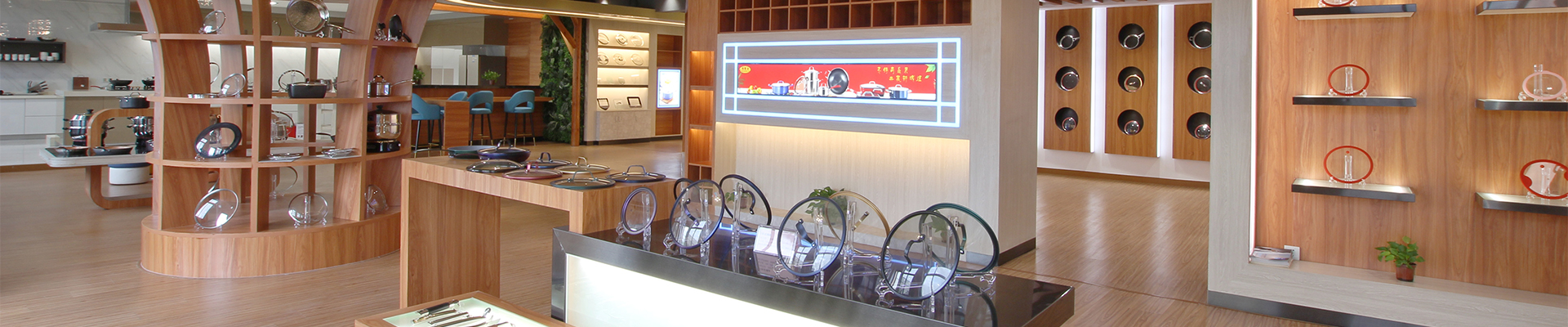
Views: 0 Author: Yinghuade-Ben Publish Time: 2026-08-21 Origin: Site


A glass lid is a pot or pan cover made from tempered (toughened) glass, almost always finished with a stainless steel or silicone rim, designed to let you monitor food while it cooks without lifting the lid and releasing heat or moisture. It's become the default lid choice across most modern cookware — not because it's flashy, but because it solves a genuinely practical problem: you can't see through metal, and you can't safely check food without breaking the seal on a solid lid. This guide covers what a glass lid is actually made of, how to choose the right one, how to care for it, and what to know whether you're buying one for your kitchen or sourcing one for a cookware line.

Visibility. The core advantage is simple: you can watch water come to a boil, check a sauce's consistency, or monitor rice without lifting the lid and losing the heat and moisture you've built up inside the pot.
Safety through tempering. Almost all glass lids sold today use tempered glass rather than ordinary annealed glass. Tempering is a heat-treatment process that leaves the glass under compressive stress at the surface, which is what allows it to withstand sudden temperature changes and everyday impacts that would shatter untreated glass. Properly tempered glass typically tolerates temperature differentials of roughly 200°C, compared to as little as 40°C for ordinary untreated glass — which is the entire reason tempering exists as a manufacturing step.
Inherently non-toxic material. Glass doesn't require any coating or surface treatment to be food-safe, which has made it increasingly relevant as consumers and regulators pay closer attention to PFAS and other coating chemicals used elsewhere in cookware. A glass lid is PFAS-free by nature, not by reformulation.
A reasonable middle ground on heat retention. Glass lids retain heat and moisture better than a fully vented or wooden lid, while offering more visibility and lighter weight than a solid ceramic or cast iron lid — making them a practical all-rounder for everyday cooking rather than a specialist choice for one specific cooking style.
Glass lids aren't a single uniform product — the rim material is what mainly differentiates one from another:
Stainless steel rim glass lids wrap the glass edge in a metal band, formed either by rolling or stamping, which protects the glass edge (its most vulnerable point) through rigid compression and physical buffering. This is generally the more durable option for heavy use and pairs visually with stainless steel cookware bodies and handles.
Silicone rim glass lids use a molded silicone edge instead of metal, offering a non-slip grip, quieter handling, and no rust risk, though with somewhat less rigid impact protection than a metal rim over the long term.
All-glass lids without a reinforced rim exist as well, typically at a lower price point, but leave the glass edge — the part most prone to chipping — without the added protection a rim provides.
Which one fits best generally comes down to how the lid will be used: everyday household cooking tends to favor silicone rim for comfort and convenience, while heavier or commercial use tends to favor stainless steel rim for long-term durability.
Sizing a glass lid comes down to one measurement: the pot's inner rim diameter — the distance across the inside of the top opening, not the outer edge and not the base diameter (which isn't standardized across manufacturers the way rim diameter is). Common sizes range from around 16cm up to 32cm (roughly 6 to 12.5 inches), with 24cm (about 9.5 inches) generally considered the most common all-purpose size for home cooking. If you're replacing a lost or broken lid rather than buying new cookware, standalone replacement glass lids are widely sold by diameter rather than locked to a specific brand, so an exact-diameter match from a different manufacturer will often work.
For situations where one lid needs to cover several different pot sizes, universal lids with a stepped, graduated silicone rim can seat correctly on a range of diameters (commonly spanning about three standard sizes per lid) — though they generally aren't compatible with pots that have two raised or symmetrical handles, and don't seal quite as tightly as an exact-diameter lid.
A tempered glass lid is engineered to resist thermal shock and impact, but it isn't indestructible, and most real-world breakage happens at the edge rather than the center of the glass — which is exactly why the rim matters as much as the glass itself. Reputable manufacturers test thermal shock resistance against standards like ASTM C149 (US) or BS EN 1183 (EU), and verify tempering quality using surface stress measurement (polariscopy) rather than relying on the tempering process alone. Food-contact safety is typically confirmed through FDA testing (US) or LFGB certification (Germany/EU), which governs whether the glass and rim materials can safely stay in contact with food.
Avoid extreme, sudden temperature changes — moving a hot lid directly into cold water is the classic cause of thermal shock cracking, even with tempered glass.
Most glass lids are dishwasher-safe, though a silicone rim generally tolerates this better long-term than exposed metal fasteners on cheaper lids.
Dry a lid promptly if it has a wooden handle or trim — moisture left standing is a more common cause of handle damage than heat exposure.
Store lids without stacking heavy items on top — the edge is the most vulnerable point to chip-inducing pressure, even when the lid isn't in direct use.
Tempered glass cannot be repaired once cracked or chipped — unlike some materials, there's no safe fix for a compromised tempered glass panel, since the internal stress pattern that makes it strong is disrupted by any crack. The practical answer to a broken glass lid is almost always a replacement lid sized to the same pot, not a repair, and in most cases that doesn't require replacing the pot itself. One detail worth knowing: broken tempered glass typically can't go in a standard curbside glass recycling bin, since it has a different melting point than bottle and jar glass and would contaminate the recycling batch — it generally needs to go in regular household trash, securely wrapped, or to a specialized glass recycling program if one is available locally.
Material | Visibility | Heat Retention | Best For |
Glass (tempered) | Excellent | Moderate | Everyday cooking, sauces, general use |
Ceramic | None | Highest | Braising, stews, slow cooking |
Wood | None | Lowest | Stir-frying, steaming, wok cooking |
Glass earns its place as the default choice specifically because it performs reasonably well across the widest range of everyday cooking situations, even though ceramic and wood each outperform it in their own specialist use case.
For cookware brands rather than individual buyers, glass lids raise a different set of questions: whether to source through OEM (a manufacturer builds tooling to your custom design) or ODM (using a manufacturer's existing rim shape with your branding applied), how to vet a manufacturer's quality control and certifications, and how tariff and sourcing trends are currently affecting the category. These are deeper topics than a single guide can cover in full, but the short version is that the same core principles apply at scale: verify actual test data rather than relying on certification claims alone, confirm rim-forming process and material traceability, and match the rim type and sizing strategy to the specific product tier you're building.
We've manufactured tempered glass lids exclusively since 2003, across the full standard size range with both stainless steel and silicone rim options. Every lid we produce passes LFGB and FDA food-contact testing, and our facility is ISO 9001 and BSCI certified, with a 20+ person quality control team managing inspection from raw material through finished goods. This is the foundation behind our work supplying cookware brands including Calphalon, Tefal, WMF, Fissler, and Supor.
Q: What is a glass lid made of?
A: Almost all glass lids sold today are made from tempered (toughened) glass, typically finished with a stainless steel or silicone rim around the edge for added protection and a secure fit.
Q: Is a glass lid safe for high heat cooking?
A: Yes, when properly tempered — tempered glass lids are designed to withstand normal stovetop and oven temperature ranges, though sudden extreme temperature changes (like plunging a hot lid into cold water) can still cause thermal shock cracking.
Q: What size glass lid do I need for my pot?
A: Measure your pot's inner rim diameter — across the inside of the top opening, not the base — and match that measurement to a lid of the same size, or slightly larger if you're using an adjustable universal lid.
Q: Can a glass lid be used on any type of pot or pan?
A: Generally yes, as long as the diameter and rim shape are compatible — the main exception is pots with two raised or symmetrical handles, which can be incompatible with adjustable universal lid designs.